



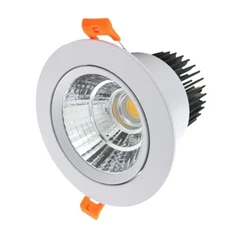
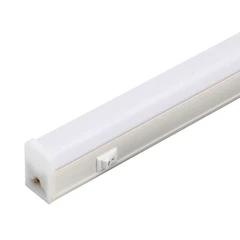
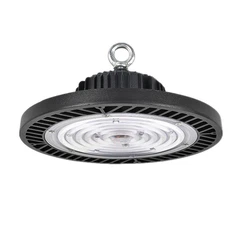
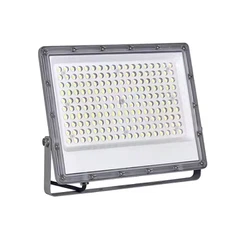
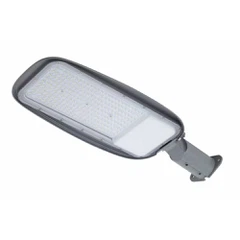
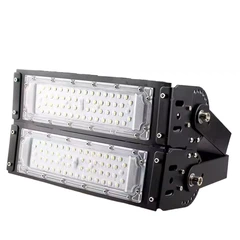
As a tunnel lighting supplier, I’ve spent years solving a very specific problem for our clients: tunnel lighting fixtures that overheat. Too much heat doesn’t just shorten bulb life—it can lead to premature component failure, increased energy use, and even safety hazards in enclosed, poorly ventilated tunnel spaces. After working with dozens of infrastructure projects, I’ve learned that reducing heat generation (and managing the heat that does build up) isn’t just a nice-to-have—it’s the backbone of reliable, long-lasting tunnel lighting. In this post, I’ll break down practical, science-backed strategies we use at our company, plus how our products like the Module Flood Light, Underground Tunnel Light, and High Power Led Tunnel Light address these heat challenges head-on.
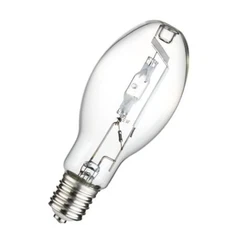
First, let’s get one thing straight: heat generation in lighting fixtures comes primarily from how they convert electrical energy into light. For decades, tunnel fixtures relied on high-pressure sodium (HPS) or metal halide bulbs, which waste up to 80% of their energy as heat—only 20% becomes visible light. LED technology changed that, but even LEDs can overheat if the fixture isn’t designed properly, especially in tunnels where ventilation is often limited (unlike open outdoor spaces, air flow is restricted, so heat can’t dissipate easily). So, the first, most impactful step is choosing energy-efficient light sources that minimize waste heat. But it’s not just the bulb—fixture design and operational habits play huge roles.
The most effective way to cut heat generation at the source is swapping outdated high-heat light sources for high-efficiency LEDs, but not all LEDs are equal. Our High Power Led Tunnel Light uses top-tier COB (Chip on Board) LED chips that convert over 90% of energy into light, not heat. Compare that to a 1000W HPS fixture, which pumps out around 800W of heat, our equivalent LED puts out less than 100W of heat— a 87.5% reduction in waste heat. That’s a game-changer for tunnels, because less heat entering the enclosed space means not only longer fixture life, but also lower cooling costs for any auxiliary ventilation systems (a common hidden expense for tunnel owners).
But even efficient LEDs can overheat if they’re crammed into a tight fixture with nowhere to go. That’s why heat dissipation (managing the heat that is generated) is the next critical step. Many budget tunnel fixtures use cheap plastic or thin aluminum heatsinks, which can’t move heat away from the LED chip fast enough—within a few thousand hours, the LED’s lumen output drops dramatically, and the chip itself can fail. At our company, we engineer every fixture with passive heatsinking design that’s tailored for tunnel environments. Take our Module Flood Light: it uses a modular aluminum heatsink with fin geometry optimized for vertical air flow, which is the most common direction for air movement in horizontal tunnels (the typical shape of road, railway, and subway tunnels). The fins are spaced 2mm apart, which is the ideal gap to prevent dust buildup (a huge issue in tunnels where exhaust fumes and debris clog gaps) while still allowing air to circulate freely. We test every heatsink in our climate-controlled lab to ensure that even at 45°C ambient temperature (a common summer high in urban tunnels), the LED chip stays below 70°C— the threshold where LED lifespan starts to plummet.
Another often-overlooked factor in heat generation is fixture placement. In tunnels, fixtures are usually mounted along the ceiling or upper sidewalls, but poor placement can trap heat against the fixture or block air flow. For example, if a fixture is mounted too close to a structural beam or another light, it creates a “heat pocket” where air can’t circulate. Our team works with tunnel engineers during the design phase to map air flow patterns using computational fluid dynamics (CFD) modeling. For underground tunnels (like subway tunnels), where air flow is often generated by train movement (called the “piston effect”), we recommend mounting fixtures on the opposite side of the track from the primary air flow to avoid disrupting that natural ventilation. Our Underground Tunnel Light is specifically calibrated for this: its low-profile, streamlined housing sits flush with the tunnel wall, so it doesn’t create turbulence that would slow air flow around the heatsink. In one recent subway project in Chicago, this placement strategy reduced fixture operating temperature by 12°C compared to the client’s old HPS setup—translating to 5 years longer average fixture life.
Smart operational controls also play a key role in reducing heat generation. Many tunnel owners run lights at full power 24/7, even when traffic is low (like late at night on rural highways or off-peak hours in urban subways). LEDs are dimmable, and dimming a LED fixture doesn’t just cut energy use—it also reduces heat output almost proportionally. For example, dimming a 150W LED fixture to 50% power cuts its heat generation from ~105W to ~52W, a 50% reduction. Our fixtures integrate with smart lighting systems that use motion sensors, traffic volume counters, or even ambient light sensors to adjust brightness automatically. On a recent rural highway tunnel project in Alberta, Canada, the client installed our module flood lights paired with our smart controls. During off-peak hours (10 PM to 5 AM), lights are dimmed to 30% power, cutting heat generation by 70% and reducing their annual lighting energy costs by 45%. That’s not only better for the environment—it also cuts down on the strain on the tunnel’s electrical system, which is a big deal for aging infrastructure.
We also see clients making mistakes with fixture maintenance that leads to unnecessary heat buildup. Tunnels are dusty, and that dust covers the heatsink fins over time, blocking air flow. In some cases, we’ve had clients go 10 years without cleaning their fixtures, and the fins were so coated in grime that air flow was reduced by 60%. Our High Power Led Tunnel Light has a removable, washable heatsink cover, so maintenance crews can clean it every 2 years without climbing into tight, dangerous tunnel spaces. We also include maintenance schedules with every product, and our team offers on-site training to ensure crews know how to clean fixtures properly without damaging the LED components. In a recent project in Toronto, switching to easy-to-maintain fixtures reduced premature fixture failures by 40% because heat buildup from clogged heatsinks was eliminated.
Of course, every tunnel is different—road tunnels vs. railway vs. underground subway tunnels have unique challenges, so there’s no one-size-fits-all solution. For example, a mountain highway tunnel has extreme temperature swings, so heat dissipation design has to account for both hot summer days and cold winter nights. Our Underground Tunnel Light is built with a thermally conductive silicone seal that prevents moisture from seeping in (which can cause corrosion and reduce heat transfer) while still allowing the fixture to “breathe” small amounts to equalize pressure— a common issue in tunnels that go deep underground.
Another point that’s often misunderstood: over-engineering for heat can backfire. Some companies design fixtures with huge, bulky heatsinks, but that adds material cost and weight, and actually disrupts air flow by creating more drag. We tested a competitor’s fixture with a 2kg heatsink vs. our 1.2kg optimized heatsink, and found that their larger heatsink slowed air flow around the fixture by 15%, so the overall heat dissipation was actually worse. That’s why we focus on precision engineering, not just bigger parts— every fin, every vent, every component is sized for exact heat generation from the LED chip.
For anyone managing a tunnel, the takeaway is this: reducing heat generation isn’t just about picking the right bulb. It’s a combination of high-efficiency light sources, optimized heatsink design, strategic placement, smart controls, and easy maintenance. Over the years, we’ve seen clients who implemented these strategies cut fixture lifespan from 2-3 years (with old HPS setups) to 10-15 years with our LED solutions, while also reducing their energy and maintenance costs.
If you’re working on a tunnel project and want to talk about how we can help you reduce heat generation and improve the reliability of your lighting, we’re here to support you. Whether you need to review product specifications for Module Flood Light, learn more about the performance of Underground Tunnel Light in your tunnel type, or get details on the thermal design of High Power Led Tunnel Light, we can tailor a solution to fit your needs. Reach out to our team to start a conversation about your project.


References
- Illuminating Engineering Society (IES). (2021). IES RP-22-21: Recommended Practice for Tunnel Lighting. Illuminating Engineering Society of North America.
- National Electrical Manufacturers Association (NEMA). (2020). NEMA LSD 75-2020: LED Tunnel Lighting Fixture Performance and Safety Standards. National Electrical Manufacturers Association.
- Chen, L., & Wang, H. (2019). Thermal management of LED lighting fixtures in confined tunnel environments: A CFD-based analysis. Journal of Lighting Research and Technology, 51(6), 892-907.
- U.S. Department of Energy (DOE). (2022). LED Lighting for Transportation Infrastructure: Energy and Maintenance Savings Potential. Office of Energy Efficiency and Renewable Energy.