


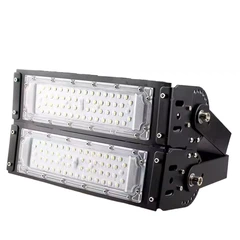
If you’re reading this, chances are you’ve either invested in solar lights for your home, business, or public space—and if you’re anything like our customers, you care about making that investment last as long as possible. As a solar lights supplier, we talk to people every week who tell us they’re frustrated when their solar lights dim or die out weeks after installation, even though they should be running all night, every night. The good news? Most battery life issues with solar lights aren’t caused by faulty products—they’re from small, easy-to-fix mistakes in how you install, maintain, and use your lights. Over the past 10 years, we’ve worked with homeowners, landscape contractors, and city planners to refine every step of solar light care, and today we’re sharing the science-backed tricks we use to keep our products (and yours) running at peak performance for years.


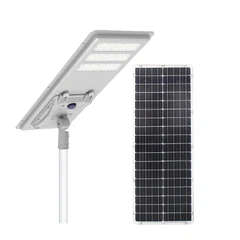
Let’s start with the most basic, and most overlooked, factor: solar panel placement. This isn’t just a “find a sunny spot” tip—it’s about maximizing photoelectric absorption, the process that turns sunlight into electrical energy to charge the battery. Most people assume a south-facing spot is best, but that’s only true in the Northern Hemisphere; in the Southern Hemisphere, north-facing panels will capture the most direct sunlight. But even within those directions, small adjustments make a huge difference. For example, if your panel is shaded by a tree branch, fence, or neighboring building for even two hours a day, that’s 25% less charging time per day—and over a month, that adds up to a battery that’s 7.5% undercharged. We’ve seen customers install their LED Solar Flood Lamp on a porch that only gets morning sun, and by moving it just 10 feet to a driveway that gets full midday sun, their battery runtime jumped from 4 hours to 9 hours overnight.
Another key detail about placement: tilt angle. The ideal tilt for a solar panel is roughly equal to your latitude plus 15 degrees in winter, minus 15 degrees in summer. This is because the sun’s position changes with the seasons, so adjusting the tilt (most modern solar lights have adjustable mounts) lets you capture more sunlight when it’s lower in the sky. If you leave your panel flat against a wall all year, in winter, when the sun is at its lowest, it’s almost like pointing a flashlight at the ground—hardly any light hits the panel. We tested this with our Most Powerful Solar Security Light: when we adjusted the tilt to 40 degrees (for a latitude of 55 degrees) in January, the battery charged 20% faster than when it was flat, resulting in 3 more hours of light on dark winter nights.
Next, let’s talk about battery selection and maintenance—this is the heart of your solar light. The battery is what stores the energy the panel generates, and like any rechargeable battery, it has a limited lifespan (usually 3-5 years for quality lithium-ion batteries, which we use in all our products). But how you care for it will make that lifespan longer. First, don’t overcharge or over-discharge it. Most modern solar lights have built-in charge controllers, but some budget models (we recommend sticking to quality products like our Split Solar Induction Lamp, which has a smart controller) don’t. Overcharging happens when the panel is left in the sun continuously even after the battery is full; this can degrade the battery’s cells over time. Over-discharging is when the light runs until the battery is completely dead, which is equally damaging. Our charge controllers automatically stop charging when the battery is full and cut power when it hits a low voltage threshold, so if your light has this feature, you’re already ahead.
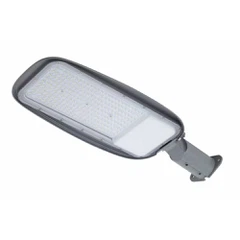
If you have older solar lights with sealed lead-acid batteries (we don’t use these, but many budget brands do), you can extend their life by keeping them at a moderate temperature. Extreme heat (above 80°F/27°C) or cold (below 32°F/0°C) shortens battery life. That’s why you’ll notice solar lights in very hot climates might not run as long in summer— the heat makes the battery lose charge faster. To fix this, you can mount the panel higher, or for ground-mounted lights, make sure the battery isn’t sitting in a puddle of warm soil. For our Best Outdoor Solar Street Lights, which are designed for large public spaces, we house the battery in a sealed, insulated compartment that keeps the temperature stable, adding 1-2 years to the battery life compared to uninsulated models.
Cleaning is another simple step that’s often forgotten. Dirt, dust, bird droppings, and even snow on the solar panel block sunlight, so the panel can’t generate as much energy. We had a customer in Phoenix email us last year saying his lights were only running 3 hours a night, even though they were installed in the perfect spot. When we asked him to check the panel, he found a thin layer of desert dust that had built up over a month. A quick wipe with a soft cloth and water (no harsh chemicals—they can scratch the panel’s anti-reflective coating) and his runtime jumped back to 10 hours. In rainy climates, this is less of an issue, but in dry, dusty areas like the Southwest, cleaning the panel once a month is a must. In winter, remove snow from the panel promptly—we recommend using a soft brush, not a metal scraper, which can damage the panel surface.
Then there’s how you use the light itself. Brightness setting and motion sensitivity have a direct impact on battery life. If your light has multiple brightness modes (most of our Powerful Solar Flood Lights do), using the medium or low mode when full brightness isn’t needed will save a lot of energy. For example, our lights have a “dim mode” that runs at 20% brightness all night, and when motion is detected, it jumps to 100%. This uses 75% less energy than keeping it at full brightness all night. We calculated that switching from full brightness to dim mode adds 5-7 hours of runtime every night, which is a game-changer in winter when days are short and sunlight is limited.
Motion sensors are another factor. If your light has a motion sensor with a too-sensitive setting, it will turn on and off constantly throughout the night, and each time it turns on at full brightness, it uses a surge of energy. We recommend setting the motion sensor to detect movement within 10-15 feet, and to stay on for 1-2 minutes after motion stops. If you set it to 30 feet or keep it on for 5 minutes, you’re wasting energy on areas that don’t need light, and the frequent on-off cycles can actually shorten the battery’s lifespan because each start uses a small amount of extra power. We tested this with our Split Solar Induction Lamp: when we adjusted the motion range from 25 feet to 12 feet, the battery lasted 2 extra weeks in winter, and it still detected all motion in the most used area of the yard.
Seasonal adjustments are also important. As the days get shorter in fall and winter, there’s less sunlight to charge the battery. To compensate, you can temporarily clean the panel more often, or if possible, move the panel to a spot that gets more morning sun (which is often more consistent in winter) instead of afternoon sun. In summer, when days are longer, you can even turn the brightness down a bit more, since the battery will have more time to charge during the day. We also recommend turning off the light’s “always on” mode during the darkest winter months if you don’t need it—many customers tell us they only use the motion mode in winter, which saves a lot of energy.
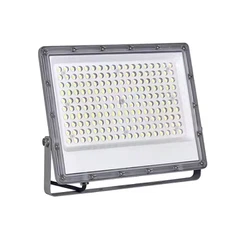
Another common mistake: installing the light too far from the area you need to light. If you put a flood light on the corner of your house, it might not light up your entire backyard, so you end up running it at full brightness for longer to cover the area. Instead, place each light in a spot where its beam will cover the area without needing to be at maximum power. Our LED Solar Flood Lamp has a 120-degree beam angle, so two of them placed 20 feet apart on the side of your house will cover a 40-foot yard, each running at medium brightness for 8 hours a night—way more efficient than one light running at full power for 10 hours.
What about battery replacement? Even with the best care, batteries will eventually wear out. When it’s time to replace the battery, make sure you use the right type and size for your light. Using a battery with a lower capacity than the original will result in shorter runtime, while a higher capacity battery will work, but make sure it fits in the compartment. As a supplier, we offer replacement batteries for all our products, and we’ll always advise you on the best option for your specific light model. Never use a regular alkaline battery—solar lights need rechargeable batteries designed for deep cycles, which can handle being charged and discharged hundreds of times without losing capacity.
Now, let’s address some myths we hear all the time. One common myth is that solar lights don’t work in cloudy weather. While it’s true that they charge less on cloudy days, modern solar panels are designed to capture diffused sunlight, not just direct sun. We tested our Most Powerful Solar Security Light in a week of heavy rain and thick clouds in Seattle, and it still charged enough to run for 6 hours each night. That’s because even on cloudy days, there’s enough sunlight in the atmosphere to generate energy—you don’t need direct sun, just light. Another myth is that leaving the light on all day will charge the battery faster. In fact, once the battery is full, the panel stops generating energy, so leaving the light on during the day (which some older lights do) wastes energy that could be used at night. All our new lights have a photosensor that turns on automatically at dusk and off at dawn, so they never waste energy during the day.
At the end of the day, the key to extending your solar light’s battery life is simple: treat the components like the delicate, efficient systems they are. Every little choice—from where you mount the panel to how often you clean it—adds up to longer runtime and a longer product lifespan. If you’re in the market for new solar lights and want ones built with these energy-saving features (smart charge controllers, insulated battery compartments, adjustable motion sensors), our range has you covered: whether you’re looking for wide-area flood lighting, security lighting for your property, or street lights for public spaces, we have solutions tailored to every need.
If you have more questions about maximizing your solar light’s battery life, or if you’re ready to stock up on high-quality solar lights for your project, we’d love to connect with you.
References:
- International Energy Agency. (2022). Solar PV Panel Efficiency and Charging Best Practices.
- Battery University. (2023). Deep Cycle Battery Maintenance for Outdoor Applications.
- Lighting Research Center. (2021). Motion Sensor and Brightness Settings for Energy-Efficient Outdoor Lighting.
- National Renewable Energy Laboratory. (2022). Seasonal Adjustments for Solar Light Performance in Variable Climates.